Automated Industrial Robot Cutting, Deburring and Grinding

Automated industrial robot cutting, deburring, and grinding have become increasingly popular in the manufacturing industry due to their ability to reduce production time, increase efficiency, and improve accuracy. Automated cutting, deburring, and grinding have replaced manual labour in many industries, including automotive, aerospace, and medical devices.

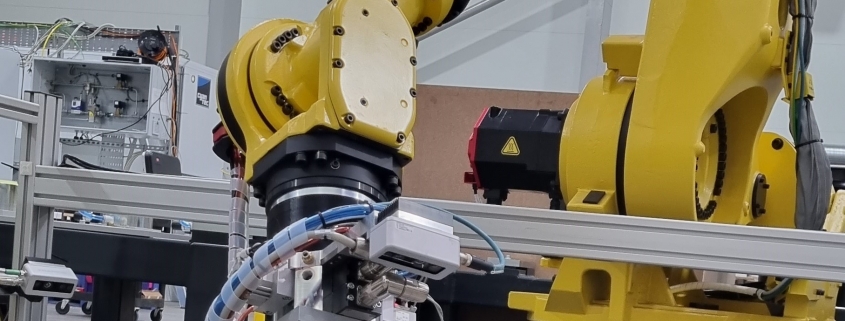
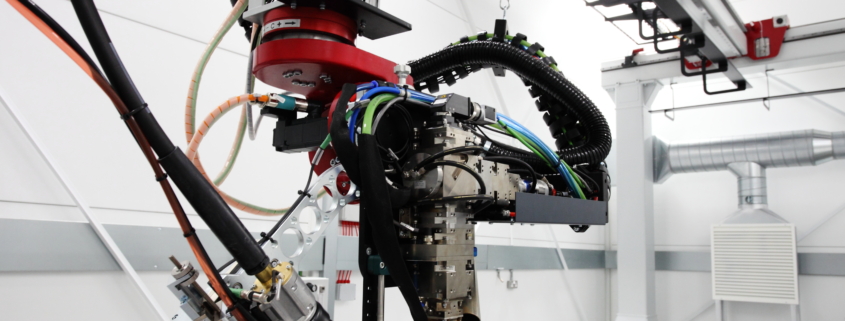
Automated cutting, deburring, and grinding are often performed using industrial robots. Robotic arms lend themselves perfectly to this type of application due to them being programmed to perform specific tasks. The robot end of arm tooling will be designed to carry the cutting, deburring, and grinding tools that can be customised to meet the specific needs of a particular industry.

The cutting process involves the use of a cutting tool to remove material from a workpiece. The cutting tool can be a saw blade, laser, or water jet. The cutting tool is attached to the robot arm, which is programmed to move the tool along a specific path to cut the workpiece.

Deburring is the process of removing sharp edges or burrs from a workpiece. This process is important to ensure that the workpiece is safe to handle and will not cause injury to workers or damage to other parts of the manufacturing process. The deburring tool is attached to the robot arm, which is programmed to move the tool along a specific path to remove the burrs.

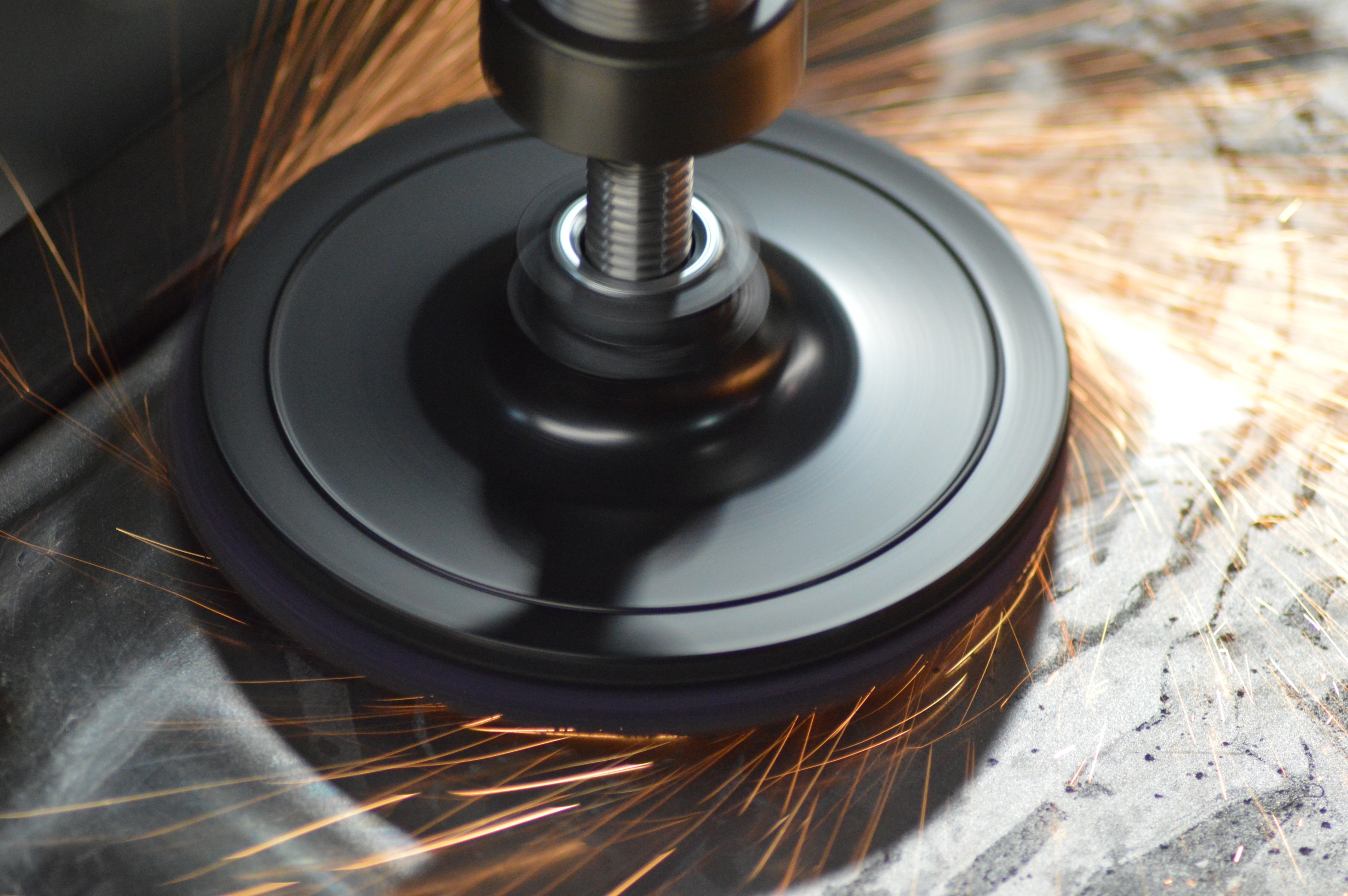
Grinding is the process of removing material from a workpiece using an abrasive wheel. The grinding tool is attached to the robot arm, which is programmed to move the tool along a specific path to grind the workpiece.

Automated industrial robot cutting, deburring, and grinding have many advantages over manual labour. These advantages include increased accuracy, improved efficiency, and reduced production time. Automated cutting, deburring, and grinding also reduce the risk of injury to workers and improve the quality of the finished product.

Automated cutting, deburring, and grinding are also more cost-effective than manual labour. There is often a considerable initial investment required to design and manufacture a robotic cell that is dedicated to the cutting, deburring, or grinding processes, though the long-term cost benefits are significant. Automated cutting, deburring, and grinding also reduce the need for manual labour, which can be expensive and difficult to find.

In conclusion, automated industrial robot cutting, deburring, and grinding have become an essential part of the manufacturing industry. These processes are performed using a range of different industrial robots that are programmed to perform specific tasks.

Cyan Tec have vast experience in the design and manufacture of robotic production facilities, working with the leading global robot manufacturers; Fanuc, ABB, Yaskawa, Staubli, Mitsubishi and many more.  

If your cutting, deburring, or grinding process is currently labour intensive, and you are considering automating to improve accuracy, efficiency and save costs, then please contact our sales team on 01509 815186 or sales@cyan-tec.com.

Cyan Tec and FANUC Bring MTC’s Vision of Large-scale Robotic Laser Cutting Cell to Life

Cyan Tec delivers an innovative suite of automation solutions, which has proved integral to the delivery of an industrial-scale laser cutting cell commissioned by the UK’s Manufacturing Technology Centre (MTC). Cyan Tec’s, demonstration cell comprises a 12m x 4m cutting table, six-axis robot, computerised numerical control (CNC) system for the flatbed, and the laser, all contained within a laser-secure enclosure.

Cyan Tec’s Grant Copson says “Our team of advanced automation engineers designed a seamless automation solution incorporating not just the robot but also the laser and motion system.”

Bigger is Better

The system was specifically commissioned by the MTC to sit at the upper end of industry expectations in terms of scale to showcase to visiting manufacturers just what is possible within automated laser cutting. There is real scope for the cell to be used within the aerospace and automotive industries, or any industry that requires large-scale pre-cut profiles. The construction sector could also benefit from cells of this size, in particular for precision cutting of profile sections for prefabricated buildings.

The cutting table and robot sit inside a large enclosure measuring 15.5m x 9m, but the space requirements go even further. The cutting table slides out an additional 13m ensuring that if an operator wants to load a 12m x 4m product, they have adequate access to do so – even if this requires the use of a crane or forklift truck.

Flexible by Design

The laser cutting bed is designed to handle flat plate. The robot’s six axes are mounted on a floor track and driven synchronously with a FANUC seventh axis, allowing it to move up and down the tube being cut. The integrated laser is versatile enough to be applied to either tubular or flat metal and can be regulated to suit different material types.

Ray Timberlake, FANUC UK Sales Manager for factory automation, points out that industrial machines of this sort have traditionally been entrusted to plasma cutters, but in this application fibre laser equipment was the only possible solution to achieve the accuracy. “The choice of laser cutting is not so much about speed, but more about the quality of the finish that you achieve.”

Cyan Tec’s technically advanced engineers selected the FANUC M-20iB robot, capable of handling payloads of 25kg for its high precision and reach of up to 2m. There are cameras inside the enclosure to monitor production for quality and safety. In addition, the enclosure is laser-tight to protect against scattering from laser beams, with interlocked guard doors to ensure there is no access while the laser is running.

Strong Collaboration

When the MTC commissioned Cyan Tec to construct the cell and specified its size and capabilities, the Cyan Tec team was quick to enlist the help of FANUC UK, with whom it enjoys a productive partnership.

“Over the last three to four years, we’ve built up a good relationship with FANUC,” says Grant. “They see us as a key integration partner, and we value the range and reliability of their automation solutions.”

FANUC UK’s strong after-sales support service is also integral to the partnership’s success, with the automation supplier able to offer an immediate response to any issues 24/7, anywhere in the country.

Overcoming Project Hurdles

In this instance, the sheer scale of the installation necessitated impressive operational responses from all involved. “The MTC had to make internal alterations to accommodate a cell of this size,” says Ray Timberlake. “The entire installation was first constructed at Cyan Tec’s workshop, commissioned there, then stripped apart, shipped and reconstructed at the MTC.”

Cyan Tec’s Grant Copson adds: “The main challenge was the physical size of the cell, as well as the detail of constructing guarding on that scale – ensuring it was safe and engineering a table that moves in and out automatically were paramount. The automation itself was less challenging, given that we are well used to applying these technologies.”

Precision with Control

Cyan Tec created its own control software for the entire cell, accessed through the HMI and utilised a FANUC 21.5-inch iH Pro human-machine interface (HMI) panel, along with all the motors and drives to control the flatbed CNC system.

The ‘complete package’ that Cyan Tec sourced from FANUC included 30ib series controls, managing both axis and machine functions, and the FANUC beam switch, which directs the laser beam either towards the robot or the flatbed.

When selecting the control system, compatibility with laser – including, potentially, those from other suppliers – was an important consideration.

This large-scale demonstration cell showcases the advanced capabilities of the Cyan Tec team and illustrates what is possible within the field of automated laser cutting. To find out more, contact sales@cyan-tec.com

Cyan Tec Recognised by Collaborate To Innovate Awards

Following a successful project in association with Atkins, MTC and PSC Radiometric Systems, Cyan Tec are delighted to announce that the Sort and Segregation team have been shortlisted for The Engineer Magazine Collaborate To Innovate Awards.

An intelligent and automated solution was designed and manufactured by Cyan Tec in collaboration with the above mentioned parties. The system is to be used to sort nuclear waste into three dedicated categories; intermediate level waste, low level waste or recyclables.

Robotic Sort and Segregation System

The six axis robot that is integrated within the system includes a bespoke end of arm tooling design. The end of arm tooling incorporates the latest scanning systems, programmed by robotic specialists, removing humans from the process which reduces risk of harm.

Cyan Tec have experience in the integration of robotic systems in many different sectors including automotive, aerospace, medical and now nuclear. The use of vision systems in automated processes is ever-changing and is becoming more of a day to day requirement for Cyan Tec’s client base. The benefits of intelligent and autonomous machinery often outweighs the cost and reliability of using operators for many tasks, but especially inspection processes. The Sort and Segregation system is aiming to reduce the cost of identifying the nuclear waste to the most appropriate stream, minimising the volume of waste requiring expensive storage and recycling or disposing of the waste in an efficient and safe manner.

For further information of Cyan Tec’s robotic and / or vision system capabilities, please contact our sales team on 01509 815186 or sales@cyan-tec.com.

Cyan Tec & Trumpf Pushing the Boundaries of Laser Integration

Members of the Cyan Tec sales team participated in the Trumpf open house, driving innovation in laser integration, from 30th November – 1st December 2022. The open house described as among the highlights of the sheet metalworking calendar provides an opportunity for OEMs and subcontractors to explore the latest developments in laser cutting, punching, welding, bending and laser marking technologies. Cyan Tec is a leading manufacturer of advanced industrial laser systems and works with Trumpf as a strategic partner bushing the boundaries of laser integration and taking advanced laser technologies into new sectors.

Cyan Tec has an enviable reputation as experts in the field of automated laser welding, cutting, cleaning, marking and engraving. CEO Clayton Sampson states “Cyan Tec operates at the cutting edge of industrial laser integration and we value the information exchange that occurs at such events which drives innovation in the field.”

Cyan Tec is a market leader in the supply of full turnkey laser systems to both industry and the research sectors. It supplies bespoke laser solutions to advanced industrial sectors including aerospace, nuclear decommissioning, automotive and battery technology. Cyan Tec also manufactures modular laser systems capable of processing metals, plastics, composites, ceramics, glass and fabrics. To learn more about bespoke or modular laser systems contact sales@cyan-tec.com.

Robotic Sort and Segregation System

Cyan Tec Launch Pioneering Robotic Sort & Seg System for Nuclear Waste

Cyan Tec reveals a fully autonomous robotic sort and segregation system for handling nuclear waste. This innovative project drives forward technology in nuclear decommissioning enabling low and intermediate level waste to be sorted remotely. The advanced robotic solution is capable of safely, effectively and efficiently sorting non-radioactive waste, to increase recycling rates, reduce the number of waste containers sent for disposal and reduce the hazard to people and the environment.

The state-of-the-art system assesses the radioactivity and physical characteristics of nuclear waste then sorts and segregates it into the correct containers with data collected to inform package records. The vision system, with machine learning, acquires 2D images and 3D cloud data of objects to automatically identify individual waste and enable robotic handling. Vision and monitoring equipment autonomously control the robot and gripper selection to segregate and package nuclear waste. Advanced material analysis techniques include laser-induced breakdown spectroscopy capable of penetrating surface coatings to analyse base materials.

Autonomous Sort and Segregation System for Nuclear Waste

Managing Director Tony Jones reports “Cyan Tec is excited to pushing the boundaries of AI and robotic technology in the nuclear industry.”

Cyan Tec’s reliable solution is both configurable and scalable enabling it to handle waste of different sizes and radioactivity levels. Cyan Tec’s modular approach means the system can be simply transferable to different nuclear facilities and environments.

Cyan Tec together with partners Atkins, PSC, Manufacturing Technology Centre and Applied Photonics successfully achieved funding to drive this innovative project through the ‘Sort and Seg’ innovation competition worth a total of £5.5m launched by Sellafield, in partnership with the Nuclear Decommissioning Authority and Magnox. The aim is to reduce waste, reduce manual sorting and increase segregation productivity.

The key benefits to the nuclear decommissioning industry include increased sustainability, reduced risks to personnel and significant cost savings in disposal costs.  

To learn more about this robotic sort and segregation system for nuclear waste or similar bespoke advanced processing solutions contact sales@cyan-tec.com

Cyan Tec Showcases Innovative Laser System at Fanuc Open House 2022

Cyan Tec are once again delighted to show off their flexible laser processing machine, Flexlase, at Fanuc’s Open House event.

The Open House, running from the 2nd to the 4th of November 2022, will be hosted at Fanuc’s state of art facility in Coventry, UK. This is a fantastic opportunity for potential clients to meet the Cyan Tec team and understand more about the capabilities of the Flexlase machine.

The small footprint design has the ability to cut or weld (configured to suit the customer’s requirements), including the integration of a wide range of different laser sources. Cyan Tec’s vast laser experience will assist in the configuration of the machine such as; laser processing optics, laser power and component fixturing.

Given that Cyan Tec have a history of working in a wide range of industries – automotive (including E-mobility), aerospace, nuclear, battery technology, pharmaceutical and plastics – the Flexlase has been designed with this in mind and can be easily configured to suit a wide range of applications.

Additionally, Cyan Tec has an envious reputation in the supply of bespoke automation, inkjet and laser systems, so if the Flexlase machine doesn’t meet your specification, our team are also on hand to discuss your specialist requirements in more detail.

Laser Welding Integration Insights from Specialist Integrator Cyan Tec

Cyan Tec have an enviable reputation when it comes to the integration of industrial laser systems, particularly in the design and manufacture of cutting and welding equipment. The latter has been a focus of late, with a large-scale project finalised for a well-regarded UK manufacturer. A key focus area for this project was the dedicated tooling, used for the clamping and presentation of the component parts. Working alongside the client, Cyan Tec produced a bespoke suite of fixtures that meet the specification of requirements and ensure a reliable process flow.

The machine was provided with an ABB IRB 6700 six axis robot, designed to reliably deliver the laser welding head to the component part, located within the aforementioned laser welding tooling. Due to the size of the components being processed by the system, the robot was fitted to an ABB IRBT motion system, effectively giving the robot a seventh axis. The robot and seventh axis were programmed by Cyan Tec’s skilled engineers to effectively run a range of component parts.

In addition to the robot and track, a 4kW Trumpf laser source was integrated, along with the required laser processing head. Following trials with the client’s components, Trumpf’s laser offering was deemed the most suitable, and ultimately underpins the success of the entire manufacturing solution.

Another feature of the machine is the shuttle system at the front of the machine. As requested by the customer, the system is manually loaded, clamped, and pushed inside the enclosure. The dual shuttle system means that one component can be laser welded, while the other shuttle is being loaded / unloaded. A number of Cyan Tec’s modular laser systems are also designed with this functionality to meet the customers cycle time requirements.

A key element in laser welding integration is the specification, supply, and delivery of the ancillary components, such as the cooling and extraction systems.

Typically, the laser source and laser processing heads are water cooled, therefore there is a requirement for a chiller. Although some laser manufacturers provide chillers as part of their supply, integrators are often required to provide a third-party cooling system and the specification of this is crucial for the protection of high-value equipment.

The extraction system is equally as important and is often a requirement for end users. The removal of laser fumes from the enclosed area as well as the filtration of such fumes before being released to atmosphere is deemed significant. The ancillary requirements such as cooling and extraction systems prove that having previous experience in integrating industrial lasers is more often than not crucial to an integrator delivering a successful automated solution.  

Additionally, the gas control is crucial to the laser welding process. Cyan Tec provided the machine with a mass flow controller, specifically designed to accurately control the assist gas from the top and bottom of the part through the component fixtures.

The laser welding process is performed within a class 1 laser enclosure, designed, and manufactured by Cyan Tec specific to each application. Depending on a number of variables such as laser power and the laser beam delivery optics, either an active or passive guard system will be provided by Cyan Tec. The design of all laser enclosures both ensure that no light can escape the cell and prevent anybody entering the laser processing area during machine operation.

In addition to bespoke laser cells like the one described above, Cyan Tec can also offer modular laser machines, which offer customers a range of laser welding and cutting solutions based around a standard platform.

Cyan Tec Launch Transformational LC Printing System

Cyan Tec Systems have launched a new bench-top, single pass, inkjet print system known as the Cyjet LC series. The printer is the latest development from the designed to replace pad printing with digital technology. The launch model is single colour with spot colours offered from Cyan Tec’s ink partner Prism Flex.

With a 54mm print width and high resolution greyscale print technology the system is ideal for promo and product marking and decorating applications.

The first two customer systems are already in full production and have more than doubled productivity over the pad printers they’ve replaced, with a manually loaded throughput rate of 15,000 parts in a single shift.

The system is fully digital and the print job can be changed at will with no make ready or change-over time. Print batches as low as one can be achieved at full production speeds. Optional variable data will allow unique identifiers, bar codes, dates and addressing as well as decorative functions.

The system is easy to set up and use and most operators require a minimum of training to be proficient. When replacing pad printing, the mixing of inks, the making of plates and cleaning of pads is eliminated.

The LC’s first customer has said the machine has been “transformational” to their business.

Cyan Tec is now working on a full colour CMYK variant printing high resolution at wider print widths.

To find out more about this transformational print system contact sales@cyan-tec.com

Leading Automation Experts Cyan Tec Promote the Importance of Automation Partners

As one of the UK’s leading system integrators, Cyan Tec Systems have built up a number of relationships with partners that play a key role in being able to provide customers with an advanced manufacturing solution.

For both the laser and robotics industry, Cyan Tec’s automation partners offer many competencies, including joint ventures, competitive pricing on industry leading technology and of course, crucial technical assistance throughout the life of any given project.

Talking of the laser industry – in particular using high quality laser products to perform tasks such as cutting, welding, and marking – worldwide manufacturers Trumpf and IPG have been at the cornerstone of Cyan Tec’s success.

In the last 12 months, the integration of significant TruDisk and TruFiber lasers from Trumpf’s strong product range has been notable. The different products, along with a stunning laboratory-type facility to perform laser trials that Trumpf can offer is crucial to integrators such as Cyan Tec, especially with customers’ expectations higher than ever.

A long-standing relationship between Cyan Tec and IPG ultimately peaked in terms of laser power when successfully integrating a 20kW laser – the largest laser source in Europe at the time – at the MTC in Coventry. The laser, featuring high performance as well as power, has performed exceptionally well, offering the MTC opportunities to bridge the gap between R&D feasibility studies. The results of these pre-production processes has seen Cyan Tec and IPG be successful on a number of projects, showing the importance of government-backed research facilities.

In recent years, Cyan Tec have integrated a number of laser markers, both as part of fully automated machines and as standalone marking enclosures. Laserlines and Keyence have been crucial to this successful spell, again offering Cyan Tec high-quality and reliable products. The latter have the ability to offer a wide range of components to compliment Cyan Tec’s automation solution, in addition to the laser marking source. These products include vision systems, sensors, and safety systems. The ability to have continuity is important for an integrator and therefore companies such as Keyence play a leading role.

Robotics have never been more prominent in Cyan Tec’s offering than they are today. In addition to using robots in laser automation, they are often used for industrial inkjet applications as well as more traditional assembly and testing automation. Fanuc and ABB, both with state-of-the-art facilities in the UK, have a long-standing relationship with Cyan Tec. The robotic offering from both companies spans all industry sectors and covers the complete range in terms of payload and reach.

In addition to traditional six axis robots, the advancement in technology now allows for a range of collaborative robots to be integrated into automated systems, often without the need for physical guarding. Cyan Tec have the in-house capability to determine which applications are truly collaborative, typically judged on the end effector or tool that is being used with the robot.

It is an exciting time for automation, and given the fast pace that the industry is changing, key partners will continue to play a leading role for Cyan Tec.  

To learn more contact sales@cyan-tec.com

Cyan Tec Launch Exciting New Laser Workstation

Following a number of successful projects, Cyan Tec are proud to launch a new laser workstation. Built using a standard fabricated base frame and guard structure, the machine aesthetics are designed to fit within Cyan Tec’s range of modular laser cells.

The design of the workstation has a spacious internal working area that can be configured to suit the particular application, including the supply of bespoke fixtures and tooling.

Originally designed for laser processing such as cutting, welding and marking, it is ultimately reconfigurable, so Cyan Tec have the flexibility to use this same machine design to perform other tasks such as leak testing and assembly operations.

A sliding door system at the front of the machine ensures easy access for loading and unloading operations, as well as maintenance access when required.

In terms of the control system, the machine is designed to house all control elements (other than ancillaries such as extraction and chiller units) in the base of the machine. With floor space often a key driver for customers, the idea is to keep the machine footprint to a minimum.

The workstation includes a HMI / monitor stand attached to the main guard frame to allow operator interaction with the system during machine operation and maintenance.

If the new laser workstation does not suit your requirements, please consider the modular laser cell offering – Standard laser material processing cells | Cyan-Tec. Cyan Tec’s Hyperion range offers a number of modular laser systems to suit a wide range of production requirements. The modular build platform of Cyan Tec’s laser systems allows the selected system to be configured to suit the customer’s specific needs.

To learn more contact sales@cyan-tec.com